

Memento Mori in the Mountains
Notes on Movement, Mortality, and Being Fully Alive

A note before you read: I wrote this piece as a submission to Mountain Athlete Journal. They passed, so I’m publishing it here instead (feels like the right home for it anyway!). It’s a departure from my usual format but not, I think, from the spirit of this publication. The mountains are a space where what I write about in Vivere Mori moves out of theory and into practice.
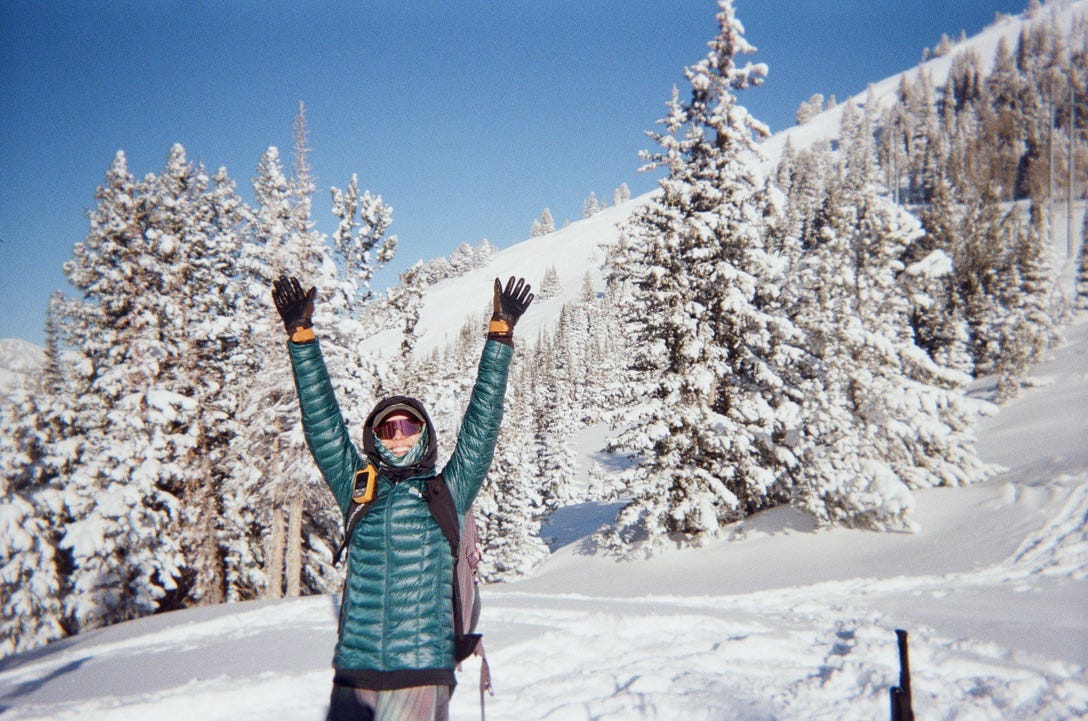
"Death and life are interdependent: though the physicality of death destroys us, the idea of death saves us. Recognition of death contributes a sense of poignancy to life, provides a radical shift in life perspective, and can transport one from a mode of living characterized by diversions, tranquilization, and petty anxieties to a more authentic mode."
— Irvin D. Yalom, Existential Psychotherapy (1980, p. 44)
It is remarkably easy to stay comfortable. Modern life is, in many respects, engineered for it: the temperature is regulated, the entertainment is endless, and everyday friction has been optimized away. This all-encompassing comfort can function like anesthesia, not just removing discomfort but flattening sensation altogether. Despite this, we each contain the innate potential to inhabit an existence that vibrates with unbridled exuberance and range.
Within existential psychology, this kind of existence is understood as true authenticity — a way of being that is present, awake, and in genuine contact with one’s own life. In our comfort-forward world, many of us spend the majority of our time in another mode that is characterized, in Yalom’s words, by diversions, tranquilization, and petty anxieties. This inauthentic existence isn’t suffering, exactly, but it’s not quite living, either.
If you’re someone who moves in the mountains, you’re no stranger to the very palpable sense that being out there can quite reliably bring us closer to the kind of authenticity the existential tradition describes.
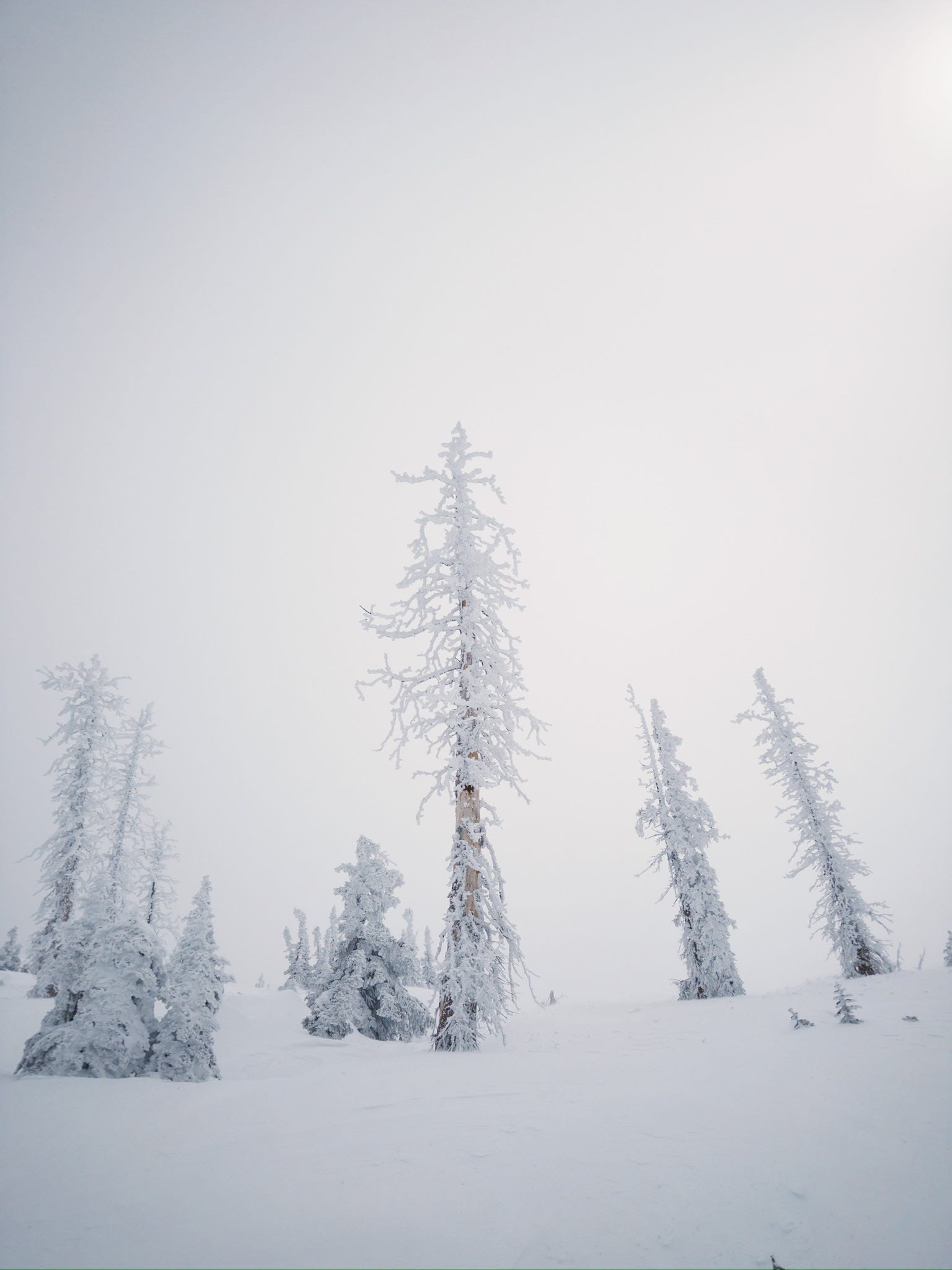
There are few places I can think of that demand your attention and presence quite like the backcountry. The cold brings you into your body, each breath a reminder that you are, in fact, alive. The terrain sharpens your focus, forcing a game of mental chess as you navigate complex topography. The snowpack—its history, its mood, and its willingness to hold—requires not only respect but frequent check-ins, as well as a humble flexibility with plans.
In the backcountry, you cannot be distracted and also be safe. The mountains accomplish, almost incidentally, something that contemplative traditions strive to teach: present moment awareness, as a practical necessity that, for many of us, touches on the spiritual. The background noise of everyday life doesn’t survive the uphill. At some point, mental chatter is replaced by pure sensation and a sense of essential humanness. Fresh tracks are a great perk, but I move in the mountains for this reason: to return to a self that feels unmediated.
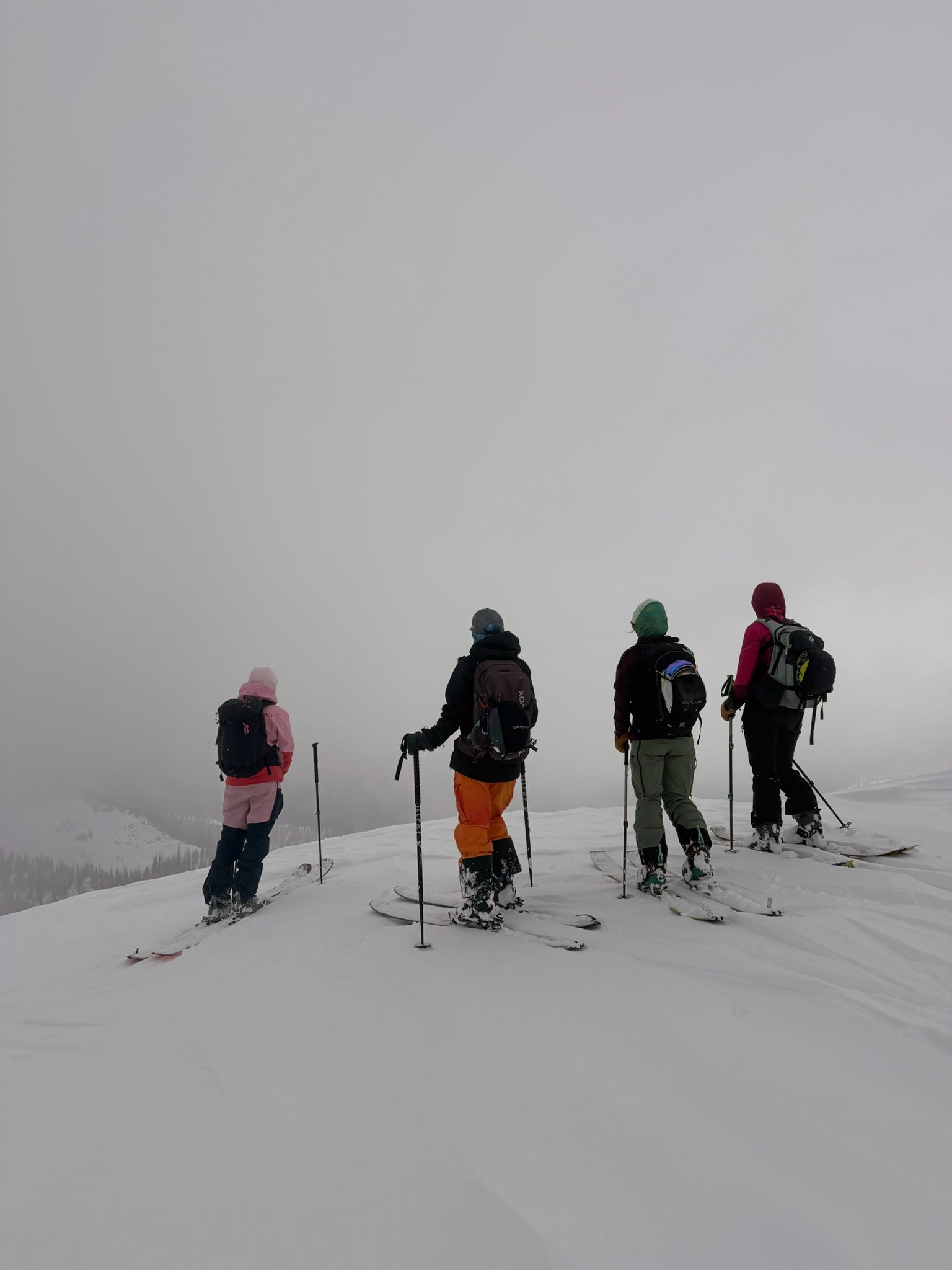
The mountains, I think, are quite uniquely capable of reminding us of how small we are. Standing at the top of something steep with your skis nudged over the edge, there is a moment before the drop in which perception seems to concurrently narrow and expand. In the language of the body, it feels like zooming in on being alive — buzzing and fully present, every sense sharpened to its finest point. The awareness of consequence is part of what produces this. One small lapse of attention can be catastrophic. And sometimes, even being completely tuned in can’t protect you from the barely-buried rock or disastrous equipment malfunction. When you’re seeking out big objectives, that proximity to consequence is vital to the experience, not incidental to it.
From the existential lens, this experience of being reminded of our mortality doesn’t have to be a source of despair but can instead trigger clarification and motivation. The knowledge of our finitude gives urgency to the present moment and has the power to shift us into a mode of being that is authentic: present, awake, and genuinely in contact with the world within and around us. Moving in the mountains makes this idea visceral rather than abstract. Under the right circumstances, being in the backcountry is embodied mortality contemplation.
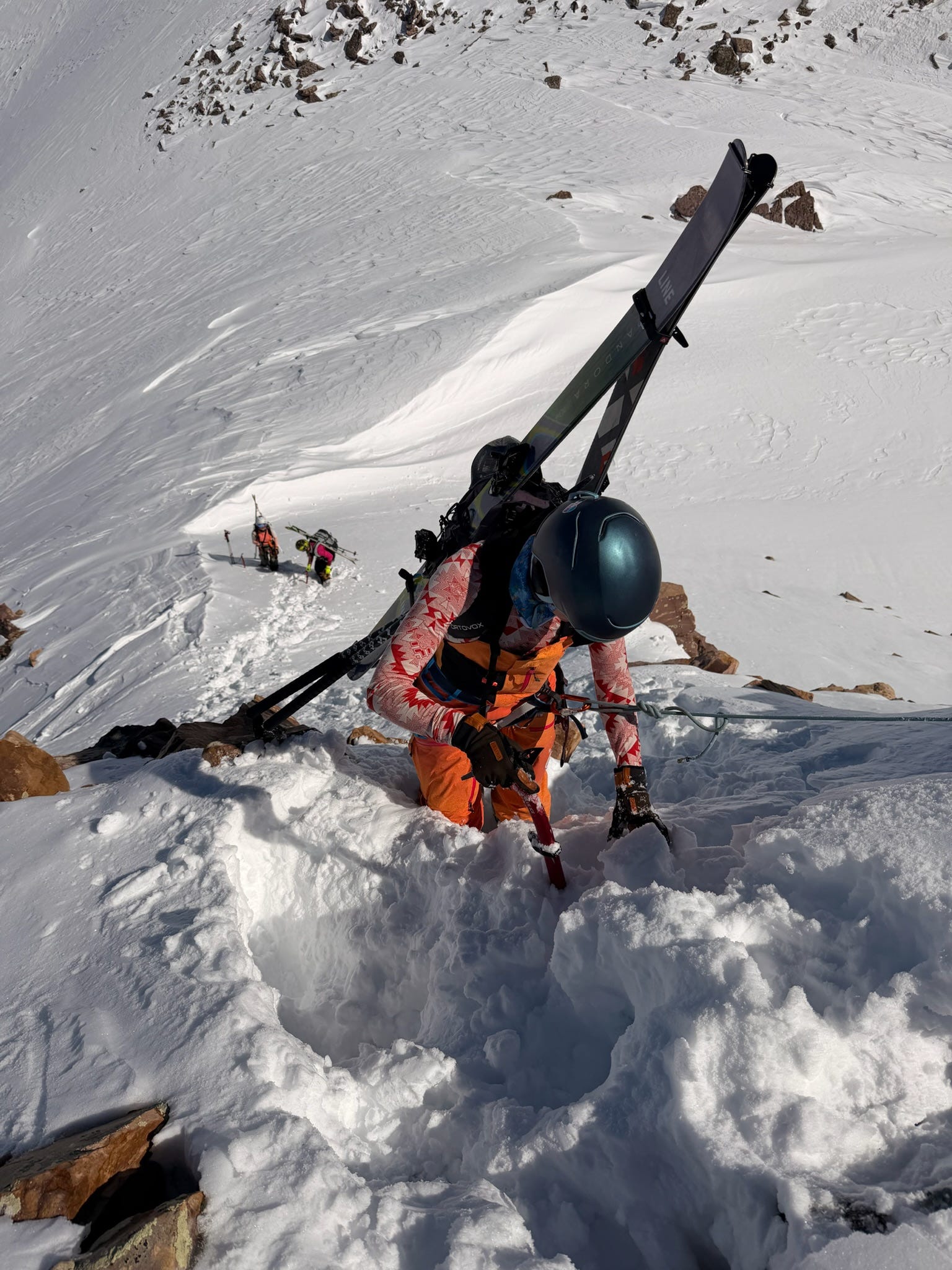
To live authentically is, inherently, to live creatively. In this context, creativity involves opening ourselves to the full array of human experience, pressing toward the edges rather than staying contained. It means getting up before the sun rises, choosing the hard climb, and bracing the discomfort until, oddly, it becomes quite comfortable. It means being willing to be opened rather than closed. A creative life is one that is fully inhabited.
Creativity is also present in how we choose to interact with the mountain. The best line up is rarely the most direct one; it requires reading the terrain rather than imposing a zig-zagged line on it, contouring around small features, and choosing responsiveness alongside efficiency. We leave our brushstrokes on the mountain. Done well, it is meditative, drawing you into ever-closer presence with the land beneath your feet.
The mountain athlete, in this sense, is engaged in a creative act every time they slap on skins and clip into their bindings. We choose, repeatedly and deliberately, to inhabit the full range of what it is to be human. To be not only open to the fullness of experience but to seek it out, to engage with our surroundings with presence and respect, and to step into the version of ourselves that exists in its most vital form.
In the act of getting lost in the mountains, we might find ourselves fully inhabiting lives of creative, unbridled exuberance.
Brilliant piece, love it 🙏
I'm so glad this is out in the world, and it means so much to me that you thought of us first. "It means being willing to be opened rather than closed. A creative life is one that is fully inhabited." So good.